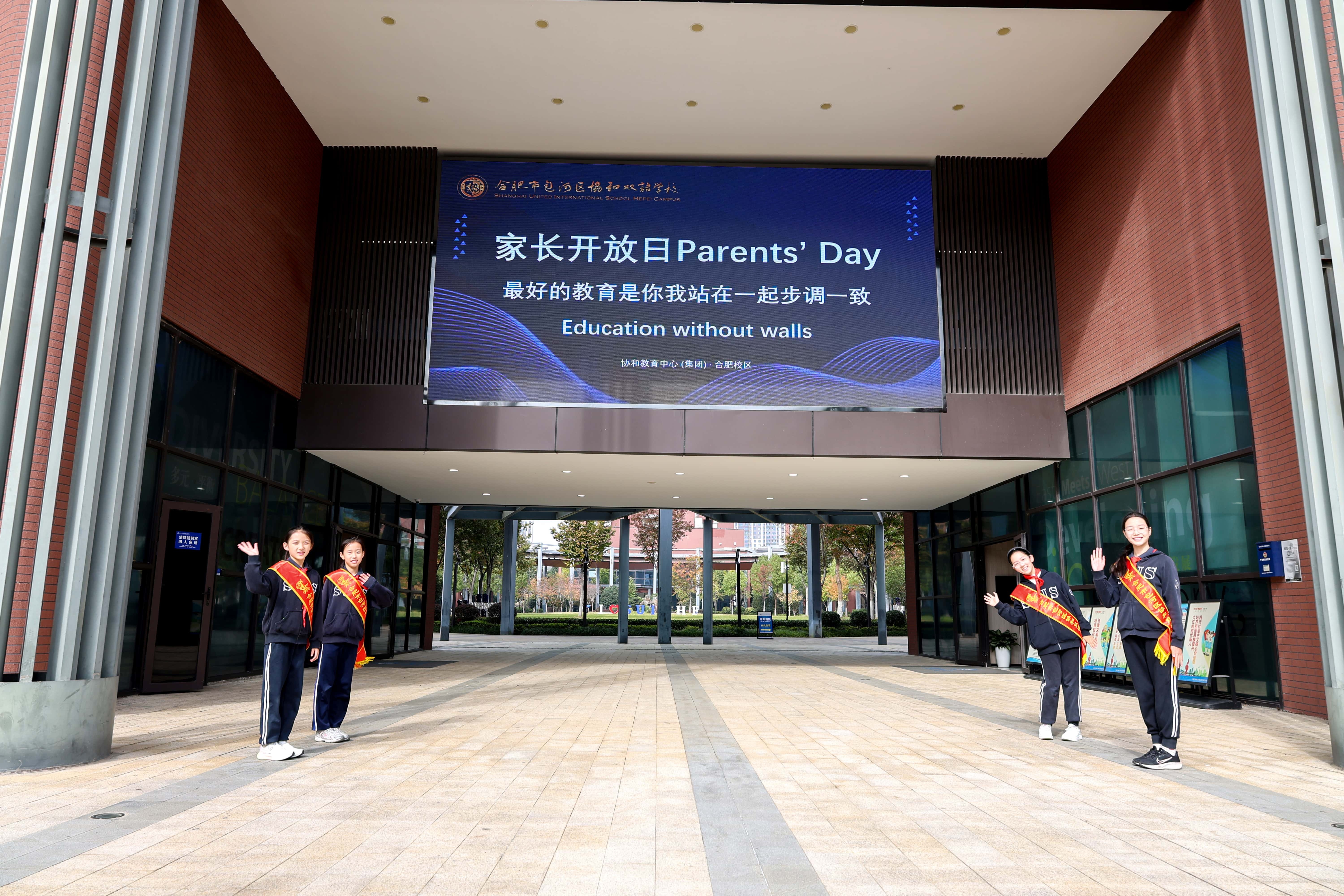
11月11日,合肥市包河区协和双语学校五年级迎来本学期的期中家长开放日。半天时间里,家长们既是听众,也是参与者:先在报告厅听一场关于“如何爱孩子”的心理讲座,再走进各班教室,与语文、数学、英语等学科老师和班主任面对面,聊一聊孩子们这半个学期的成长模样。期中是一个特别的节点:它恰好落在孩子成长的坡道上,也落在家庭教育最容易“凭感觉走”的阶段。
On the 11th of November, P5 parents at SUIS Hefei Campus, attended this term’s mid-term parents’ open day. Over the course of half a day, parents acted as both listeners and participants: first, they attended a psychology talk in the auditorium on ‘How to Love Your Child’, before visiting their children’s classrooms to speak face-to-face with subject teachers—including those for Chinese, Maths and English—as well as form tutors, to discuss their children’s progress over the past half-term. The mid-term mark is a significant milestone: it falls precisely at a point where children are on an upward trajectory in their development, and also coincides with a stage in family education when it is easiest to rely on gut instinct.
第一场:在报告厅,学习“爱的分寸”
Session 1: In the lecture theatre, a session on ‘The Balance of Love’
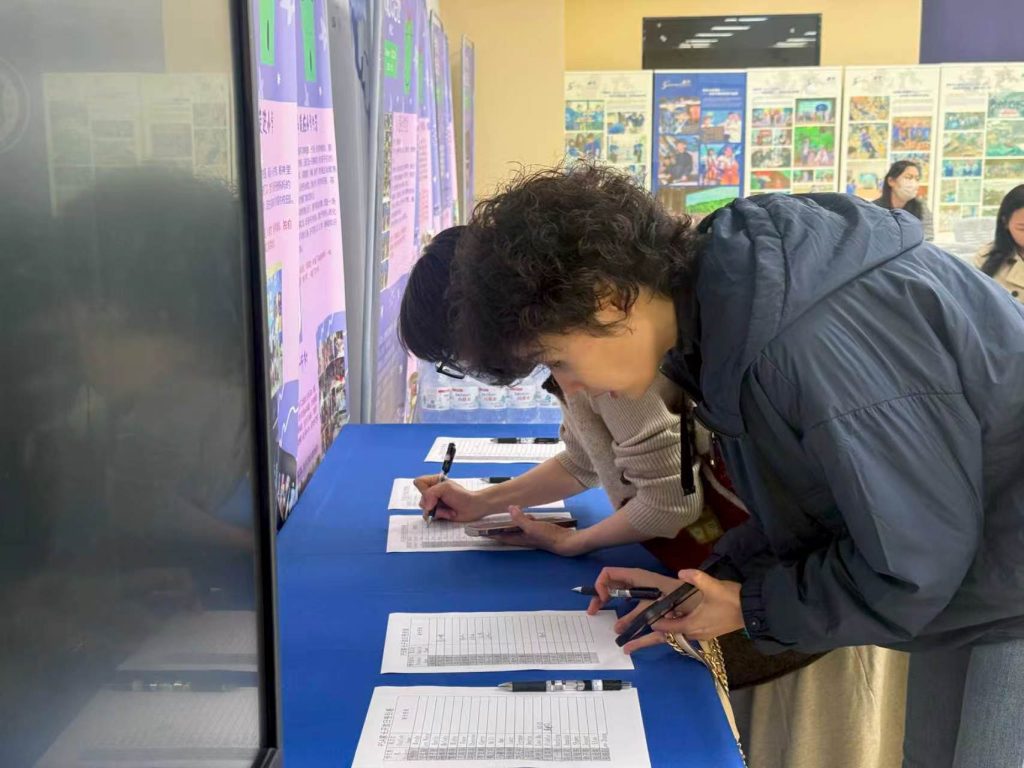
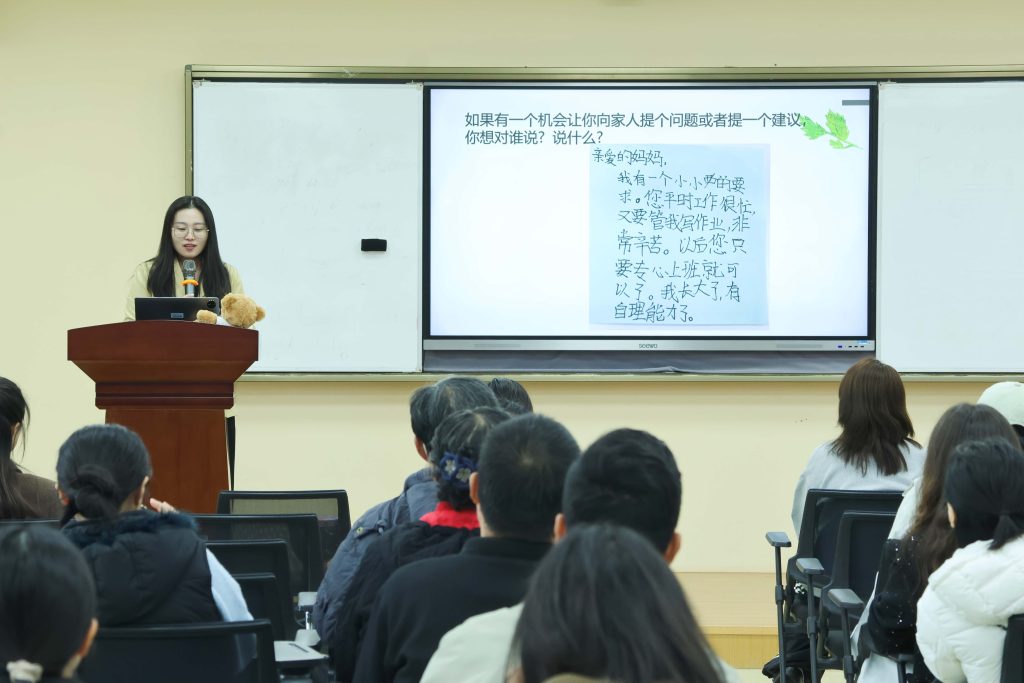
开放日的第一部分,由学校心理老师丁老师为家长们带来专题讲座《这样的爱刚刚好》。讲座从一场互动暖身开始。几分钟的轻松氛围,让家长们放下“来听会”的心态,真正走进接下来的分享。随后,老师带家长们重新认识五年级的孩子:身体快速发育,认知由具体走向抽象,情绪更丰富也更隐蔽,社交圈由父母转向同伴。四个维度逐一铺开,现场不时有人低头记录,也有人会心一笑——那些在家里“说不通”的瞬间,似乎都有了被理解、被回应的线索。
The first part of the Open Day featured a special lecture for parents entitled ‘Just the Right Amount of Love’, delivered by Ms. Ding, the school’s psychology teacher. The lecture began with an interactive warm-up activity. The relaxed atmosphere over the course of a few minutes helped parents let go of their ‘just here to attend a meeting’ mindset and truly engage with the discussion that followed. The teacher then guided the parents in gaining a fresh understanding of their P5 children: rapid physical development; a shift in cognition from the concrete to the abstract; emotions that are both richer and more subtle; and a social circle shifting from parents to peers. As these four dimensions were explored one by one, some in the audience could be seen taking notes, whilst others smiled knowingly—those moments at home when ‘nothing seemed to get through’ now appeared to offer clues to being understood and responded to.
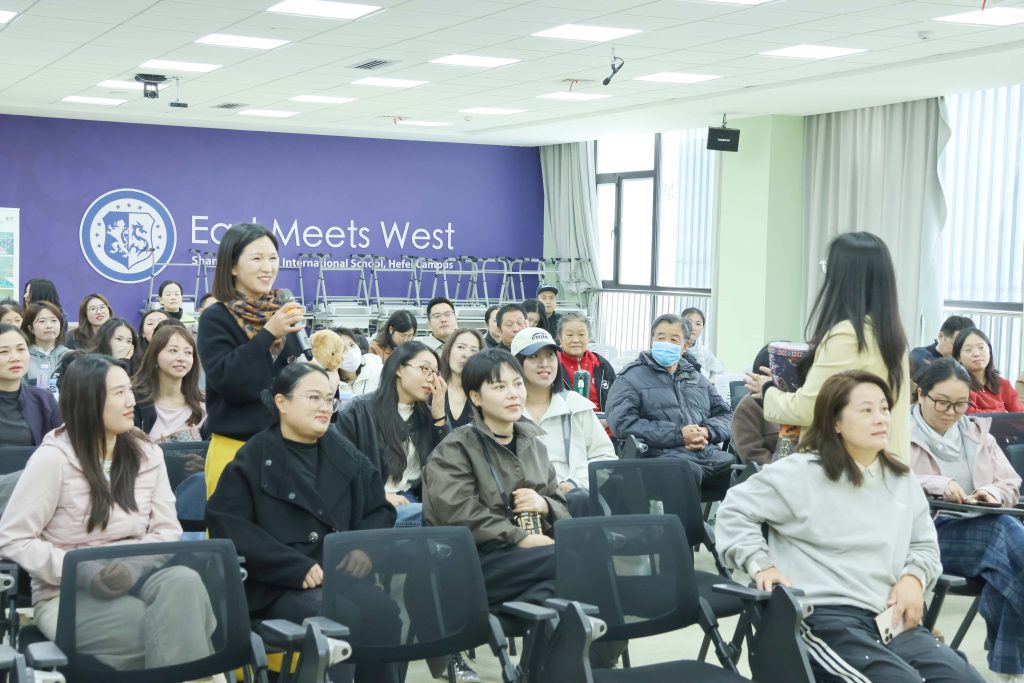
重头戏是“家长可以做什么”。心理丁老师给出四条路径:看见孩子的情绪并积极反馈,让孩子的感受被承认;用“加法视角”看孩子,用“三明治”的方式沟通,先肯定、再提建议、最后给支持;帮助孩子树立正确的交友观;以及许多家长最不知从何谈起的性教育,与孩子一起做好应对成长的身心准备。讲座在“爱的五种语言”中收束。爱不是给得越多越好,而是给得“刚刚好”。
The highlight of the session was ‘What parents can do’. Ms. Ding, the psychology teacher, outlined four approaches: recognising children’s emotions and providing positive feedback to acknowledge their feelings; viewing children from a ‘positive perspective’ and using the ‘sandwich method’ of communication—first offering affirmation, then making suggestions, and finally providing support; helping children develop a healthy outlook on friendships; and sex education—a topic many parents find difficult to broach—working with children to prepare them physically and mentally for the changes that come with growing up. The lecture concluded with a discussion of ‘The Five Love Languages’. Love is not about giving as much as possible, but about giving ‘just the right amount’.
第二场:在教室,把话说透
Session 2: In the Classroom, Getting Your Point Across Clearly
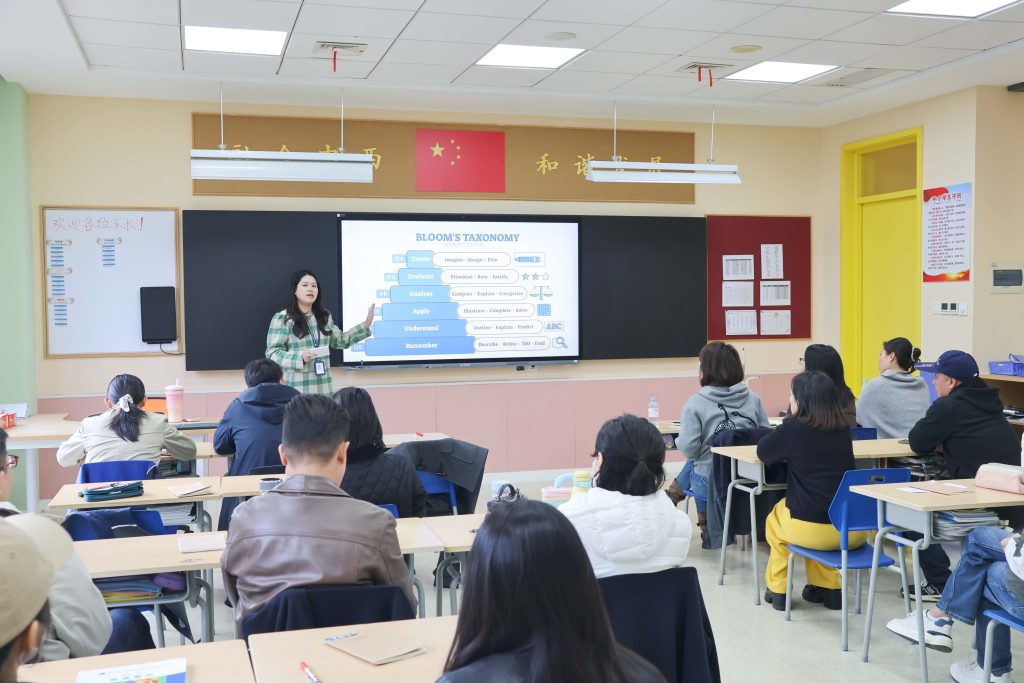
如果说报告厅里的讲座是“共性的追问”,那么走进各班教室,就是“个体化的回答”。各班家长会上,各学科老师依次发言。语文谈阅读与书写,数学谈思维习惯与错题的价值,英语谈日常积累与开口的勇气。每门学科都结合半学期来的真实表现,讲清“现在在哪里”,也讲明“接下来怎么走”——这一阶段的重点是什么,家庭可以怎样配合。最后,班主任做总结:既肯定这半个学期孩子们的可喜变化,并给出针对性的改进措施与家校协作建议。
If the lectures in the auditorium represent a ‘search for common ground’, then stepping into the classrooms is a ‘personalised response’. At the parents’ evenings for each class, teachers from each subject took turns to speak. The Chinese teacher discussed reading and writing; the maths teacher addressed thinking habits and the value of mistakes; and the English teacher spoke about daily accumulation of knowledge and the courage to speak up. Each subject drew on the pupils’ actual performance over the past half-term to clarify ‘where they are now’ and outline ‘the way forward’—what the priorities are for this stage and how families can support their children. Finally, the form tutor summarised the session, acknowledging the encouraging changes the pupils had made over the past half-term whilst offering targeted measures for improvement and suggestions for home-school collaboration.
一个下午的开放日结束得很快,但它留下的东西不会很快消散。
An afternoon open day passed all too quickly, but the memories it left behind will not fade so soon.
家长走进校园,看见的是孩子每天生活的空间、面对的老师、身处的同伴;学校打开校门,分享的是一场讲座、一次会议,更是一种态度——教育从来不是单方面的给予,而是家校彼此理解、共同托举的漫长过程。
When parents step onto the school grounds, they see the spaces where their children spend their days, the teachers they interact with, and the peers they spend time with; when the school opens its gates, it shares not only a lecture or a meeting, but also a mindset—education is never a one-way process of giving, but rather a long-term journey of mutual understanding and shared support between home and school.
五年级的孩子,正站在童年的尾巴和少年的门口。他们需要的爱不必轰轰烈烈,只需刚刚好:看得见,接得住,留有余地。愿我们家校携手,把这份“刚刚好”的爱,稳稳地送到每个孩子手上。
P5 pupils stand at the very tail end of childhood and on the threshold of adolescence. The love they need need not be grand or dramatic; it simply needs to be just right: visible, accessible, and allowing room to breathe. May we, as a community of home and school, work hand in hand to ensure that this ‘just right’ love is delivered securely into the hands of every child.